Mobilisation populaire : France & États-Unis, deux manières de penser le collectif (et le rôle de l’État) - Popular Mobilization: France & the United States — Two Ways of Thinking About Collective Action (and the Role of the State) (Level B1-B2)
🎯 Audio & quiz included
Voici quelques expressions et mots de l'article à connaître qui vous permettront d'enrichir votre vocabulaire :
crée une crispation : creates tension
descendre dans la rue : to take to the streets
fait partie : is part of
un acteur central du bien commun : a central actor of the common good
puissant : powerful
largement considéré comme : widely considered as
plus méfiant : more distrustful
repose sur une volonté fondatrice : is based on a founding will
privilégient l’action locale : prioritize local action
une pression nationale exercée sur l’État fédéral : national pressure exerted on the federal state
une crainte très forte liée aux grandes mobilisations : a strong fear linked to large-scale mobilizations
des trajectoires historiques profondément distinctes : deeply distinct historical trajectories
des réflexions du siècle des Lumières : reflections from the Enlightenment
visaient : aimed
la contestation est d’abord pensée comme : protest is first conceived as
comme une mobilisation de masse : as a mass mobilization
mettre fin à : to put an end to
on interpelle directement l’État : one directly challenges the State
en agissant d’abord dans son environnement proche : by acting first within one’s immediate environment
Quand on est Français et que l'on vit aux États-Unis, on est frappé par une différence très visible :
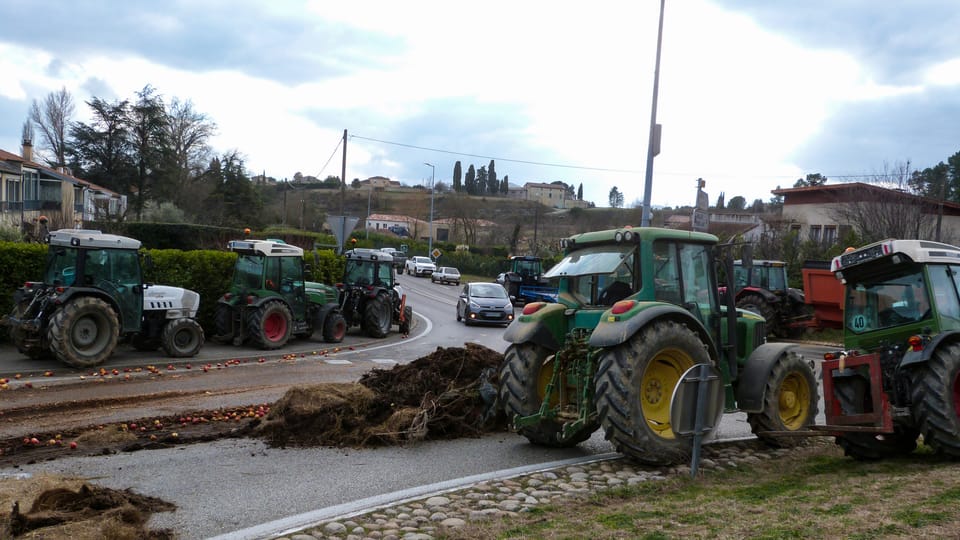
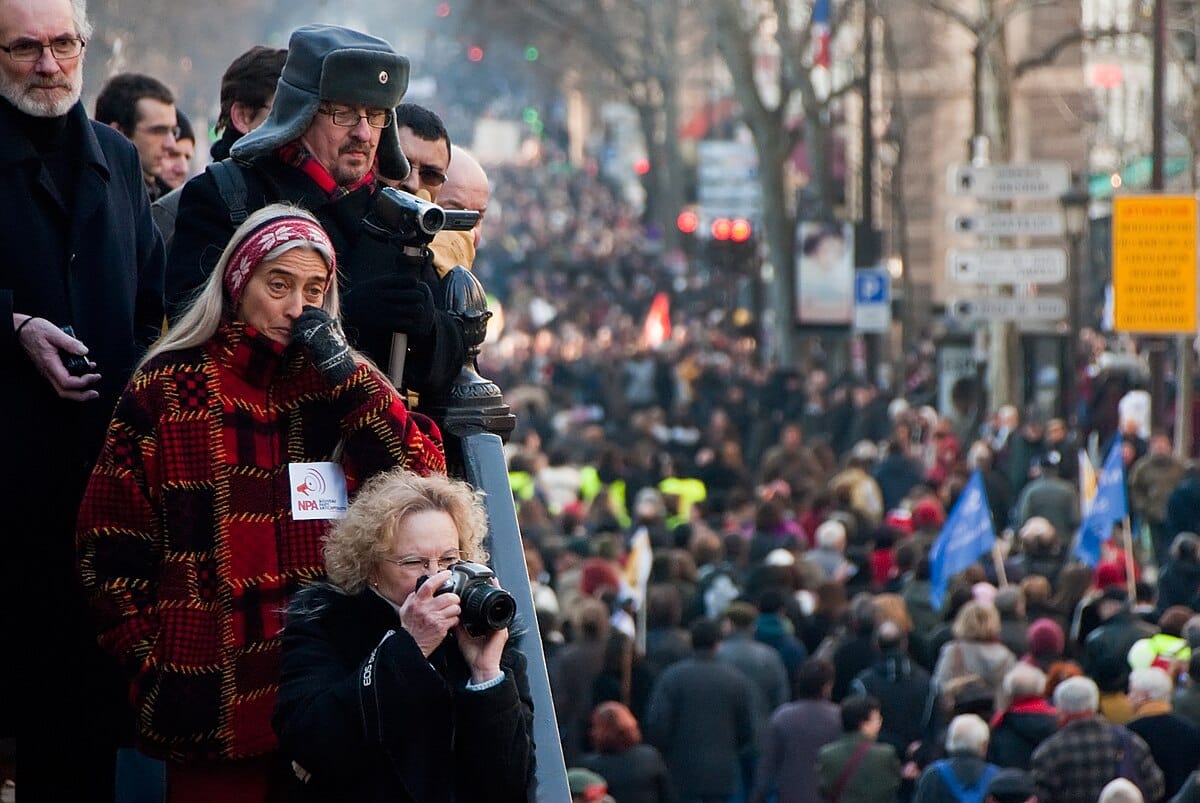
en France, dès qu’un sujet crée une crispation (creates tension) avec l’État, des centaines de milliers de personnes peuvent descendre dans la rue (to take to the streets) en quelques jours. Manifester fait partie (is part of) du paysage démocratique : c’est une manière directe de parler au pouvoir.
En France, l’État est perçu comme un acteur central du bien commun (a central actor of the common good).
Il est puissant (powerful), très présent dans la vie quotidienne, et largement considéré comme (widely considered as) responsable de l’intérêt général. Même lorsqu’il est violemment critiqué, il reste l’interlocuteur légitime.
Manifester, c’est s’adresser à l’arbitre du jeu collectif.
Aux États-Unis, le rapport à l’État semble historiquement plus méfiant (more distrustful).
La construction du pays repose sur une volonté fondatrice (is based on a founding will) : se protéger d’un pouvoir central trop fort. Washington est souvent perçu comme lointain, parfois intrusif, et pas nécessairement comme le lieu où se construit le sens moral collectif.
Manifester contre l’État n’est donc pas un réflexe culturel aussi naturel qu’en France.
Beaucoup d’Américains privilégient l’action locale (prioritize local action) : l’école, le quartier, les associations, les communautés.
Le changement est souvent pensé comme le résultat d’actions concrètes, visibles, à petite échelle, plutôt que comme une pression nationale exercée sur l’État fédéral (national pressure exerted on the federal state).
Certains de nos élèves américains évoquent aussi une crainte très forte liée aux grandes mobilisations (a strong fear linked to large-scale mobilizations) de rue.
Ils parlent d’un possible basculement vers le chaos, voire d’un risque de guerre civile lorsque les tensions deviennent trop importantes.
Cette perception peut surprendre — voire inquiéter — des Français, pour qui la manifestation est généralement vue comme un outil normal du débat démocratique.
Un éclairage historique pour mieux comprendre
Ces différences de comportements s’expliquent aussi par des trajectoires historiques profondément distinctes (deeply distinct historical trajectories).
Les États-Unis naissent comme une république fondée sur une Constitution qui place, dès son premier amendement, la liberté d’expression au cœur du projet politique. Cette nouvelle nation s’inspire directement des réflexions du siècle des Lumières (reflections from the Enlightenment), et notamment de Montesquieu, dont les idées sur la séparation des pouvoirs visaient (aimed) précisément à limiter toute concentration excessive de l’autorité.
Dans ce cadre, la contestation est d’abord pensée comme (protest is first conceived as) un droit individuel fondamental, protégé juridiquement, mais pas nécessairement comme une mobilisation de masse (as a mass mobilization) tournée vers l’État central.
La France, comme de nombreux pays européens, suit un chemin très différent.
Elle connaît successivement la monarchie, des régimes autoritaires, des ruptures brutales, avant que la Révolution française n’impose la rue comme un acteur politique majeur. La contestation y est violente, collective, et décisive pour mettre fin à (to put an end to) l’Ancien Régime.
Il faudra près d’un siècle d’instabilité politique avant qu’une République relativement stable ne s’installe durablement.
Dans ce contexte, la manifestation s’inscrit dans une mémoire collective forte : celle d’un peuple qui fait pression sur l’État pour transformer le système. La rue devient un espace politique légitime, presque institutionnalisé.
Deux cultures politiques, deux logiques cohérentes
Ces différences ne traduisent ni une passivité américaine ni un radicalisme français.
Elles reflètent deux manières cohérentes de penser le collectif :
- en France, on interpelle directement l’État (one directly challenges the State) pour faire évoluer le cadre général ;
- aux États-Unis, on cherche souvent à transformer la société en agissant d’abord dans son environnement proche (by acting first within one’s immediate environment).
Cet article est le fruit de discussions, d’observations et d’échanges avec des étudiants.
Il ne prétend pas proposer une vérité unique, mais une clé de lecture parmi d’autres.
Et vous, comment percevez-vous ces différences culturelles ?
Vous sentez-vous plus à l’aise avec une mobilisation nationale ou avec un engagement local et communautaire ?
Essayez d’exprimer votre opinion en français, même avec des phrases simples.
📝 Quiz — La mobilisation populaire en France et aux États-Unis
FR/EN — Réponds aux 5 questions puis clique sur Calculer mon score.
1) En France, à quoi sert principalement la manifestation selon le texte ?
In France, what is the main purpose of demonstrations according to the text?
2) Comment l’État est-il généralement perçu en France ?
How is the State generally perceived in France?
3) Pourquoi la manifestation est-elle moins naturelle culturellement aux États-Unis ?
Why is protesting culturally less natural in the United States?
4) Quelle forme d’engagement est souvent privilégiée par les Américains selon le texte ?
What form of engagement is often favored by Americans according to the text?
5) Quel élément historique aide à comprendre la différence entre les deux pays ?
Which historical element helps explain the difference between the two countries?
TRADUCTION :
Popular Mobilization: France & the United States, Two Ways of Thinking About the Collective Action (and the Role of the State)
When you are French and you live in the United States, you are struck by a very visible difference: in France, as soon as a subject creates tension with the State, hundreds of thousands of people can take to the streets in a few days. Demonstrating is part of the democratic landscape: it is a direct way to speak to power.
In France, the State is perceived as a central actor of the common good. It is powerful, very present in daily life, and largely considered responsible for the general interest. Even when violently criticized, it remains the legitimate interlocutor.
Demonstrating means addressing the referee of the collective game.
In the United States, the relationship with the State seems historically more distrustful. The country's foundation rests on a foundational desire: to protect oneself from a central power that is too strong. Washington is often perceived as distant, sometimes intrusive, and not necessarily as the place where the collective moral sense is built.
Demonstrating against the State is therefore not as natural a cultural reflex as in France.
Many Americans prioritize local action: the school, the neighborhood, associations, communities. Change is often thought of as the result of concrete, visible, small-scale actions, rather than as a national pressure exerted on the federal State.
Some of our American students also evoke a very strong fear related to large street mobilizations. They speak of a possible slide towards chaos, or even a risk of civil war when tensions become too great. This perception can surprise — or even worry — the French, for whom demonstrations are generally seen as a normal tool of democratic debate.
A Historical Perspective for Better Understanding
These differences in behavior are also explained by profoundly distinct historical trajectories. The United States was born as a republic founded on a Constitution that places freedom of expression, from its very first amendment, at the heart of the political project. This new nation is directly inspired by the reflections of the Age of Enlightenment, and notably by Montesquieu, whose ideas on the separation of powers aimed precisely to limit any excessive concentration of authority. In this framework, protest is first thought of as a fundamental individual right, legally protected, but not necessarily as a mass mobilization directed towards the central State.
France, like many European countries, followed a very different path. It successively experienced monarchy, authoritarian regimes, and brutal ruptures, before the French Revolution imposed the street as a major political actor. Protest there was violent, collective, and decisive in putting an end to the Ancien Régime. It would take nearly a century of political instability before a relatively stable Republic was permanently established. In this context, the demonstration is part of a strong collective memory: that of a people who put pressure on the State to transform the system. The street becomes a legitimate, almost institutionalized political space.
Two Political Cultures, Two Coherent Logics
These differences translate neither into American passivity nor French radicalism. They reflect two coherent ways of thinking about the collective:
- In France, we directly challenge the State to change the general framework;
- In the United States, people often seek to transform society by acting first in their immediate environment.
This article is the result of discussions, observations, and exchanges with students. It does not claim to offer a unique truth, but one key to understanding among others.
And you, how do you perceive these cultural differences? Do you feel more comfortable with a national mobilization or with a local and community engagement? Try to express your opinion in French, even with simple sentences.