Brigitte Bardot : comprendre une icône au-delà des chiffres - Understanding an Icon Beyond the Numbers (Level B1-B2)
🎯 Audio & quiz included
Voici quelques expressions et mots de l'article à connaître qui vous permettront d'enrichir votre vocabulaire :
au-delà : beyond
trompeurs : misleading
infiniment : infinitely
parcours de star : star’s trajectory
clivante : divisive
fulgurante : blazing
Le basculement : The turning point
Inédite : new
contre sa volonté : against her will
fixe (fixer) : anchors / to fix
Traquée : Hounded
il l’épuise : it exhausts her
loin des plateaux : far from film sets
engagement total : total commitment
consacre alors : then devotes
Fourrure, chasse, abattage rituel, maltraitance : Fur, hunting, ritual slaughter, mistreatment
largement reconnu : widely acknowledged
se durcit : hardens
se rapproche de l’extrême droite : draws closer to the far right
valent cinq condamnations : lead to five convictions
la haine raciale : racial hatred
à lisser : to smooth out
n’a jamais cherché l’équilibre : never sought balance
Son héritage : Her legacy
côte à côte : side by side
Brigitte Bardot en quelques chiffres :
56 films.
Un peu plus de 20 ans de carrière.
1973 : rupture définitive avec le cinéma.
Des chiffres impressionnants, mais trompeurs. Car derrière ces données sèches se cache une personnalité infiniment plus complexe qu’un simple parcours de star. Brigitte Bardot a été un phénomène culturel, puis une figure de rupture, enfin une voix radicale et profondément clivante.
Une icône fulgurante :
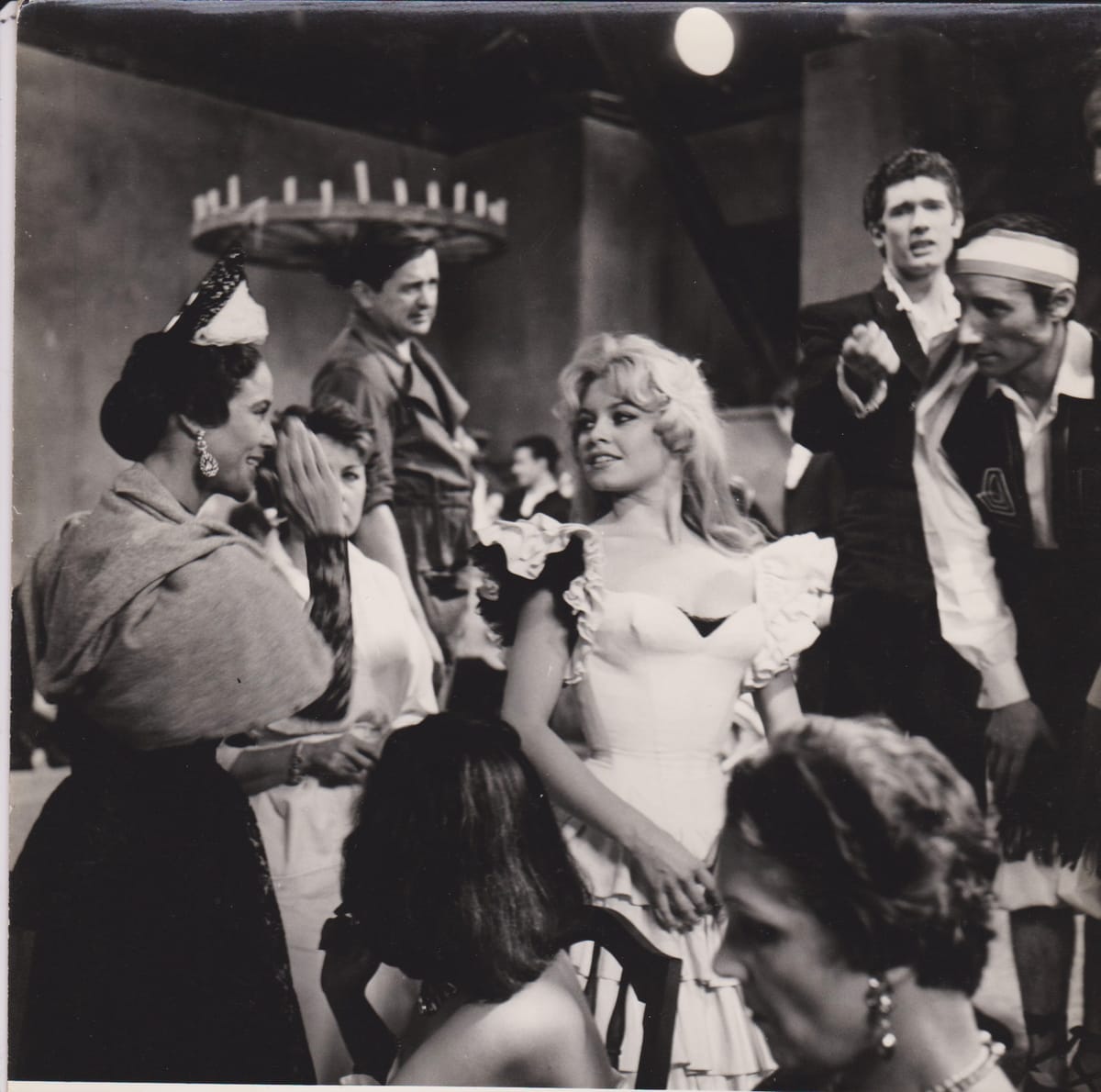
Le basculement a lieu en 1956 avec Et Dieu… créa la femme. À 22 ans, Bardot impose une image inédite : une femme libre, sensuelle, indisciplinée, loin des codes respectables de l’époque. Le film est un succès massif en France et aux États-Unis. Bardot devient un mythe mondial, un symbole de modernité et de désir, parfois réduit à cela — souvent contre sa volonté.
Elle enchaîne les tournages avec les plus grands réalisateurs, de Louis Malle à Jean-Luc Godard. Le Mépris (1963) fixe définitivement son image dans l’histoire du cinéma. Mais la célébrité est violente. Traquée, surexposée, Bardot étouffe. Dès 1960, elle fait une tentative de suicide. Le succès ne la protège pas : il l’épuise.
1973 : la fuite :
En 1973, à moins de 40 ans, elle quitte brutalement le cinéma. Pas de retour, pas de nostalgie. Elle juge ce monde “dérisoire, superflu, inutile”. Ce départ marque une seconde vie, radicalement différente, loin des plateaux mais pas du conflit.
La cause animale, engagement total :
Bardot consacre alors toute son énergie à la défense des animaux. Dès les années 1960, puis de façon structurée avec la création de sa fondation en 1986, elle devient une pionnière de l’animalisme en France. Fourrure, chasse, abattage rituel, maltraitance : elle attaque frontalement, sans compromis. Sur ce terrain, son engagement est constant, durable, et largement reconnu.
Quand la parole dérape :
Mais à partir des années 1990, son discours se durcit. La défense des animaux se mêle à des propos sur l’immigration, l’islam et l’identité nationale. Bardot se rapproche de l’extrême droite, soutient publiquement le Front national et Marine Le Pen. Ses déclarations lui valent cinq condamnations pour provocation à la haine raciale, puis une dernière en 2021 pour injures racistes visant les habitants de l’île de La Réunion.
Une figure impossible à lisser :
Brigitte Bardot n’a jamais cherché l’équilibre ni l’excuse. Elle revendique ses contradictions, assume l’isolement, refuse toute repentance. Icône absolue du cinéma français, pionnière de la cause animale, elle laisse aussi l’image d’une parole incontrôlée, devenue source de fractures profondes.
Son héritage est double, et indissociable : le mythe et la polémique, côte à côte.
📝 Quiz – Compréhension du texte
Choisissez la bonne réponse puis cliquez sur Vérifier mes réponses.
1) Quel événement marque le véritable tournant dans la carrière de Brigitte Bardot ?
2) Pourquoi les chiffres présentés au début du texte sont-ils qualifiés de “trompeurs” ?
3) Pour quelle raison Bardot quitte-t-elle définitivement le cinéma en 1973 ?
4) À partir des années 1990, quelle évolution marque son discours public ?
5) Comment le texte résume-t-il l’héritage de Brigitte Bardot ?
Astuce : vous pouvez modifier vos réponses et cliquer à nouveau.
TRADUCTION :
Brigitte Bardot: Understanding an Icon Beyond the Numbers
Brigitte Bardot in a few figures:
56 films.
An acting career spanning just over 20 years.
1973: a definitive break with cinema.
Impressive numbers—but misleading. Behind these dry facts lies a personality far more complex than a simple star’s trajectory. Brigitte Bardot was first a cultural phenomenon, then a disruptive figure, and finally a radical and deeply divisive voice.
A blazing icon
The turning point comes in 1956 with And God Created Woman. At 22, Bardot imposes a completely new image: a free, sensual, undisciplined woman, far removed from the respectable codes of the time. The film is a massive success in both France and the United States. Bardot becomes a global myth, a symbol of modernity and desire—often reduced to that image, frequently against her will.
She goes on to work with the greatest directors, from Louis Malle to Jean-Luc Godard. Contempt (1963) definitively anchors her image in film history. But fame is brutal. Hounded and overexposed, Bardot suffocates. As early as 1960, she attempts suicide. Success does not protect her; it exhausts her.
1973: the escape
In 1973, before the age of 40, she abruptly quits cinema. No return, no nostalgia. She judges that world “derisory, superfluous, useless.” This departure marks the beginning of a second life, radically different—far from film sets, but not from conflict.
The animal cause: total commitment
Bardot then devotes all her energy to animal protection. From the early 1960s onward, and more structurally with the creation of her foundation in 1986, she becomes a pioneer of animal rights activism in France. Fur, hunting, ritual slaughter, mistreatment: she confronts these issues head-on, without compromise. On this front, her commitment is constant, long-lasting, and widely acknowledged.
When words go off the rails
From the 1990s on, however, her rhetoric hardens. The defense of animals becomes entangled with statements on immigration, Islam, and national identity. Bardot draws closer to the far right, publicly supports the Front National and Marine Le Pen. Her declarations lead to five convictions for incitement to racial hatred, followed by a final one in 2021 for racist insults targeting the inhabitants of Réunion Island.
A figure impossible to smooth out
Brigitte Bardot never sought balance or excuses. She embraced her contradictions, accepted isolation, and showed no remorse. An absolute icon of French cinema and a pioneer of the animal cause, she also leaves behind the image of an uncontrolled public voice—one that became a source of deep social fractures.
Her legacy is double and inseparable: the myth and the controversy, side by side.